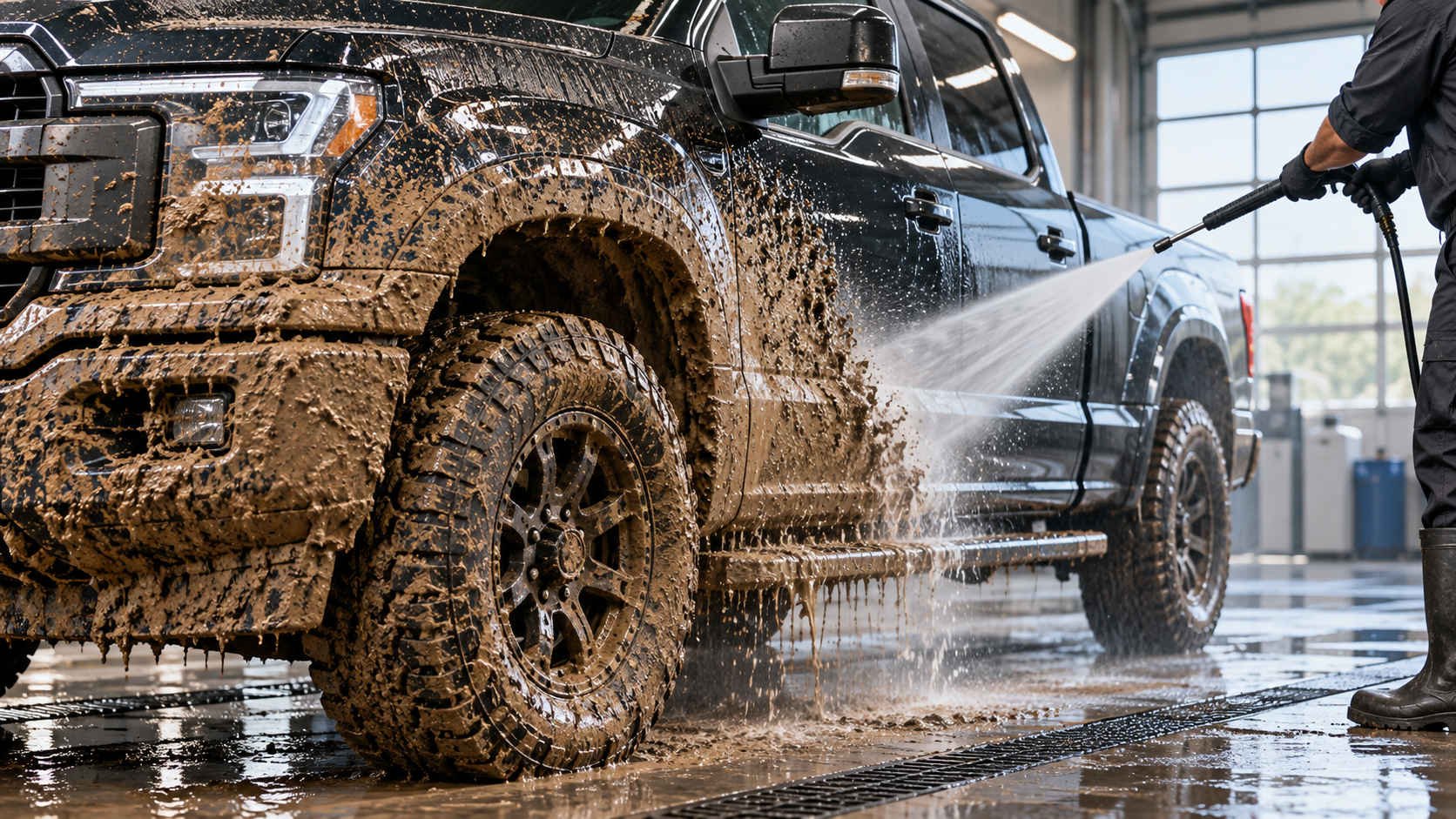
Knowing how to clean a muddy truck properly means doing more than rinsing the doors and tires. Mud and road grime often collect around the lower body, wheels, running boards, door jambs, floor mats, carpets, and other areas that are easy to overlook. If dirt has also made its way inside the cab, a quick wash may leave much of the real buildup untouched.
The right approach depends on how heavily the truck has been used and whether the mess is limited to the exterior or has spread throughout the vehicle.
How to Clean a Muddy Truck the Right Way
Start with the heaviest exterior buildup before moving inside.
A practical order is:
- Loosen heavy mud before touching the paint
- Clean wheels, tires, and lower body areas
- Wash the main exterior surfaces
- Check running boards and door jambs
- Remove muddy mats and loose items from the cab
- Vacuum dry dirt and debris
- Clean carpets, floors, and high-use interior areas
- Inspect the truck for buildup that remains
If mud has dried into carpets, collected throughout the cab, or combined with weeks of road grime, professional truck detailing may save considerably more time than cleaning each area separately.
Don’t Start by Scrubbing Dry Mud
One of the easiest mistakes is rubbing dried mud before it has been loosened.
Mud can contain grit and small particles. Dragging that material across painted surfaces creates unnecessary friction and may make cleaning harder.
Start by removing as much loose buildup as possible with water before using wash mitts, towels, or other contact methods.
The same principle applies to heavily soiled wheels and lower panels: remove the worst buildup first instead of spreading it across cleaner surfaces.
Focus on the Areas Closest to the Road
The lower half of a truck usually carries the most dirt.
Pay particular attention to:
- Wheels
- Tires
- Lower doors
- Rocker areas
- Bumpers
- Grille
- Lower body panels
- Running boards or side steps
These areas often stay dirty even when the upper body looks reasonably clean.
For a truck used on muddy roads, trails, or jobsites, that lower buildup can return quickly unless those areas are cleaned thoroughly.
Running Boards and Door Jambs Are Easy to Miss
Mud does not stop at the outside edge of the truck.
Shoes and boots can transfer it onto running boards, steps, door openings, and eventually into the cab.
Check:
- Running boards
- Nerf bars
- Side steps
- Door jambs
- Lower door edges
- Entry areas
Cleaning these areas helps prevent dirt from being tracked back inside immediately after the rest of the vehicle has been cleaned.
Get the Mud Out of the Cab Before It Spreads
Once mud reaches the interior, handle loose debris before wet cleaning.
Start by removing:
- Floor mats
- Tools
- Work gear
- Outdoor equipment
- Loose trash
- Anything blocking the floor
Let wet mud dry enough to remove loose material without spreading it further, then vacuum what you can.
Pay close attention to:
- Driver-side floor
- Carpet edges
- Under the seats
- Rear floor areas
- Seat tracks
- Cargo areas
Rubber or all-weather floor mats are usually easier to clean outside the truck.
Carpeted surfaces may need more attention if mud has dried into the fibers.
Mud made it from the trail or jobsite into the cab?
Running Boards and More Store offers Full Service Detailing for trucks, cars, and SUVs from our South Charleston location.
Get a Quote
Work Trucks Usually Need More Than an Exterior Wash
A work truck often gets dirty from both directions.
Outside, it deals with roads, mud, dust, and jobsites.
Inside, it may collect:
- Dirt from work boots
- Dust
- Tools and equipment debris
- Food and drink spills
- Mud
- Heavy floor buildup
That is why a truck can look clean after a wash but still feel dirty when you open the door.
If you use your truck for work every day, keeping the cab under control can be just as important as cleaning the exterior.
What to Consider Before Cleaning a Muddy Truck
The level of cleanup should match the condition of the vehicle.
| Truck Condition | What May Be Enough |
| Fresh, light mud | Basic wash |
| Dried exterior mud | More thorough exterior cleaning |
| Mud on steps and jambs | Detailed entry-area cleaning |
| Mud inside the cab | Interior cleaning and vacuuming |
| Heavy jobsite buildup | Professional truck detailing |
| Interior + exterior heavily soiled | Full Service Detail |
A truck with one muddy wheel does not need the same treatment as one that has spent weeks moving between jobsites.
Trail Mud and Jobsite Dirt Create Different Problems
Where the dirt came from can tell you where to look.
After Trails or Outdoor Use
You are more likely to find buildup around:
- Wheels and tires
- Lower body panels
- Bumpers
- Running boards
- Entry areas
After Jobsite Use
The cab often needs just as much attention as the exterior:
- Floors
- Carpets
- Driver seat area
- Console
- Door panels
- Rear floor
After Wet Daily Driving
The buildup may be less dramatic but more widespread, especially around lower panels, floor mats, and door jambs.
Should You Clean Mud Off Right Away?
When possible, yes.
Fresh mud is generally easier to remove than buildup that has dried and remained on the truck for days.
Cleaning sooner also helps keep dirt from moving farther into:
- Door jambs
- Steps
- Carpets
- Cargo areas
- Interior trim
You do not need professional detailing after every muddy drive.
But allowing repeated layers of dirt to accumulate can turn a simple cleanup into a much larger job later.
When Does Professional Truck Detailing Make More Sense?
Consider a professional detail when:
- Mud is both inside and outside the truck
- Carpets or seats have noticeable buildup
- The truck is heavily used for work
- Road grime has accumulated over time
- A normal car wash no longer gets the truck looking clean
- You do not have time for several hours of deep cleaning
- You want to reset the vehicle before travel, selling, or a new work season
At that point, addressing the truck as a whole may be more practical than chasing dirt area by area.
Professional Truck Detailing in South Charleston, WV
Running Boards and More Store provides Full Service Detailing for trucks, cars, and SUVs from its South Charleston, West Virginia location.
For muddy or heavily used trucks, the service can address interior and exterior areas such as:
- Seats
- Carpets
- Floors
- Dashboard
- Center console
- Glass
- Wheels
- Tires
- Mirrors
- Grille
- Trim
- Lower body areas
Full Service Detailing currently starts at:
- Small vehicles: $150
- Midsize vehicles: $175
- Large vehicles: $200
Final pricing depends on vehicle size, condition, and any additional services required.
Learn more about our interior and exterior detailing service.
No Time to Deep-Clean Your Truck Yourself?
Running Boards and More Store offers Pickup & Return for detailing.
Your truck can be picked up, brought to the South Charleston shop for service, and returned when the detail is complete.
The detailing itself is performed at the shop.
Ask About Pickup & Return
Frequently Asked Questions
Loosen the mud with water before scrubbing or wiping it. Removing heavy buildup first helps avoid dragging dirt and grit across the surface.
You do not have to clean it the minute you get home, but removing heavy mud sooner usually makes the job easier and helps prevent buildup from spreading to other areas.
Remove loose dirt first and vacuum thoroughly. If mud has dried deeply into carpet fibers or staining remains, deeper interior cleaning may be needed.
They can. Trucks exposed to jobsite dirt, work boots, tools, mud, and heavy daily use often accumulate interior and exterior buildup faster.
Running Boards and More Store provides Full Service Detailing for trucks from its South Charleston, WV location.
Get a Quote for Your Truck or SUV Upgrade
Prefer to Speak With Us?
Call us directly and speak with a product specialist.
- Serving Charleston, WV and surrounding areas.
- Mon–Fri: 9:00 AM – 5:00 PM