
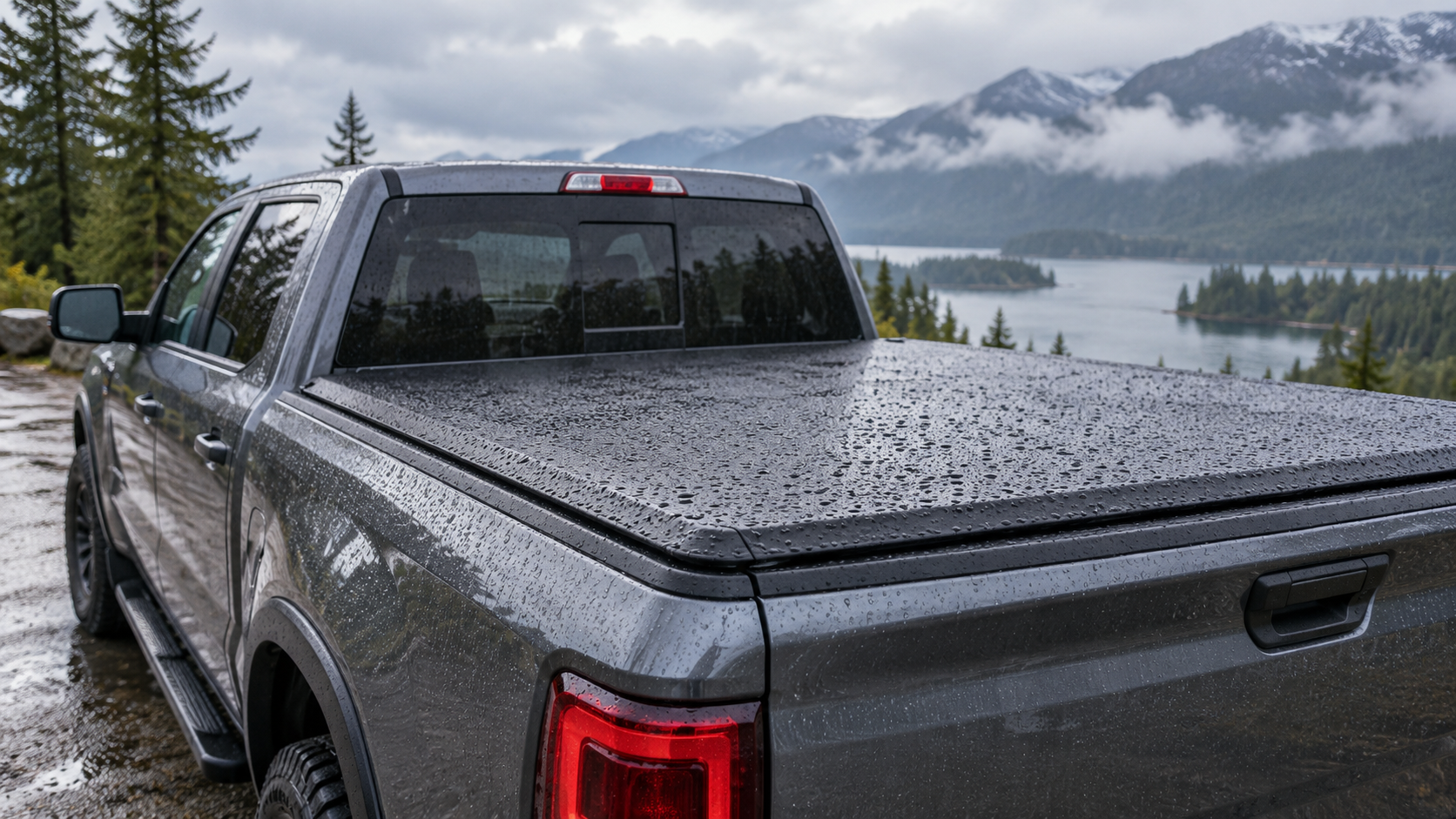
Tonneau covers are generally water-resistant, not completely waterproof. A properly fitted, quality cover can keep the vast majority of rain and snow away from your cargo, but small amounts of moisture may still enter through the tailgate, bed rails, seals, factory gaps, or drainage areas.
That distinction matters when you are deciding whether a tonneau cover is right for your truck.
If you need to carry tools, luggage, work equipment, groceries, or recreational gear through rain and changing weather, a tonneau cover can significantly improve cargo protection compared with leaving the truck bed completely exposed. But it should not be treated like a watertight storage container.
Independent testing from Car and Driver reached the same conclusion: the covers they tested provided varying degrees of water resistance, but they were reluctant to describe any as completely waterproof.
Waterproof and Water-Resistant Are Not the Same Thing
These terms are often used interchangeably, but they mean different things.
Waterproof implies that water should not penetrate the system under its rated conditions.
Water-resistant means the product is designed to reduce water intrusion and protect against normal weather exposure, but some moisture may still get through.
Most truck beds already contain potential entry points before a cover is installed:
- Tailgate gaps
- Bed rail joints
- Factory openings
- Stake pockets
- Drainage points
- Gaps created by accessories
A tonneau cover sits on top of that existing structure. It can dramatically improve weather protection, but it does not turn the bed into a sealed box. Truck-bed-cover specialists make the same distinction, noting that pickup beds contain seams and openings that can allow moisture and road spray to enter.
Where Does Water Usually Get Into a Covered Truck Bed?
Instead of asking only whether a cover is waterproof, it is more useful to understand where leaks can happen.
| Potential Water Entry Point | Why It Matters |
| Tailgate gaps | Factory gaps around the tailgate can allow moisture or road spray into the bed |
| Bulkhead area | The front edge of the cover must seal correctly against the bed near the cab |
| Side rails | Poor alignment or damaged seals can allow runoff beneath the cover |
| Panel or hinge areas | Folding designs rely on seals between moving sections |
| Drainage system | Some covers channel water through rails and drain tubes rather than blocking every drop |
| Bed accessories | Racks, toolboxes, liners, or rail systems can interfere with a clean seal |
This is why a small amount of water inside the bed does not automatically mean the tonneau cover has failed.
The better question is:
Is the cover managing water properly and keeping normal weather exposure away from the cargo area?
Seals Do Much of the Work
The perimeter sealing system is one of the most important parts of weather protection.
A properly installed tonneau cover may use seals around:
- The front bulkhead
- Driver-side bed rail
- Passenger-side bed rail
- Tailgate area
- Hinges or panel joints
These seals need to sit evenly against the truck.
If a rail is mounted too high, too low, or slightly out of alignment, a gap can develop even when the cover itself is well designed.
Over time, seals should also be checked for:
- Damage
- Compression
- Dirt buildup
- Separation
- Misalignment
RealTruck notes that correct installation is central to keeping most water out of the bed, which is another reason fitment matters just as much as the cover material itself.
Some Tonneau Covers Manage Water With Drainage
An important point buyers often miss is that some systems are designed to manage water rather than completely block it at the surface.
For example, certain retractable covers use:
- Rail channels
- Drainage trays
- Drain tubes
Water that enters the rail area is collected and routed outside the truck bed through drainage points.
That does not mean the cover is leaking incorrectly. In many cases, drainage is part of the intended design.
Current retractable-cover manufacturers explicitly describe drain tubes that route collected water out through the truck bed rather than trying to make the entire system hermetically sealed.
When shopping, ask:
How does this specific cover handle water?
That question is more useful than simply asking whether it is “waterproof.”
What Should You Expect in Normal Rain?
A properly fitted quality tonneau cover should keep the vast majority of ordinary rain away from your cargo.
That is one of the main reasons truck owners install them.
You may still find occasional moisture near:
- Tailgate corners
- Bed edges
- Drainage areas
- Factory openings
The amount varies based on the truck and cover.
For everyday driving, that level of protection is often more than sufficient for:
- Work equipment
- Groceries
- Luggage
- Sports gear
- Camping supplies
- Boxes and personal belongings
If something absolutely cannot tolerate moisture, however, it is still smart to place it in a sealed container or protective bag inside the bed.
What Happens During Heavy Rain?
Heavy or wind-driven rain creates more challenging conditions.
When the truck is moving, water does not simply fall vertically onto the cover. Wind and road speed can push water against seals and through small factory gaps around the bed.
During prolonged storms, you may see more moisture than during normal rain.
This does not necessarily mean you chose the wrong tonneau cover.
Weather performance depends on the entire system:
cover + seals + bed + tailgate + mounting + drainage.
Car and Driver’s testing also found that even high-quality covers can have minor water entry points, particularly during more aggressive water exposure such as car washes.
What About Snow and Winter Weather?
For truck owners in West Virginia, snow matters too.
A tonneau cover can help keep falling snow directly off the bed and cargo, but melting snow eventually becomes water.
That means the same sealing and drainage principles apply.
After winter weather, it is useful to:
- Remove excessive snow according to the manufacturer’s recommendations
- Keep drainage areas clear
- Inspect seals
- Remove accumulated road salt and dirt around mounting areas
- Check that rails remain properly aligned
Freeze-thaw cycles can expose small sealing issues that may not be noticeable in summer.
A tonneau cover remains extremely useful in winter, but expecting zero moisture under every snow and ice condition is unrealistic.
Does a Bed Liner Affect Water Resistance?
It can.
A spray-in bed liner usually follows the shape of the truck bed closely, while a drop-in liner may alter surfaces around the rails or bulkhead.
Depending on the cover’s mounting system, those differences can affect:
- Clamp positioning
- Seal contact
- Rail alignment
This does not mean a tonneau cover cannot work with a bed liner.
Many do.
It simply means compatibility should be checked before installation.
The same applies to:
- Toolboxes
- Bed racks
- Cargo rails
- Other bed-mounted accessories
Anything that changes the area where the tonneau cover mounts or seals can affect weather performance.
Why Installation Matters for Water Resistance
Even an excellent tonneau cover can perform poorly if it is installed incorrectly.
Weather protection depends on several installation details:
- Rails sitting at the correct height
- Even pressure from clamps
- Correct front seal placement
- Panels or cover material sitting square over the bed
- Drain tubes routed correctly when required
- Tailgate interaction
- Proper cover tension where applicable
This does not mean every cover requires complicated installation.
Many products use vehicle-specific, no-drill mounting systems.
But no-drill does not mean alignment does not matter.
At Running Boards & More Store, professional installation helps ensure the selected tonneau cover is properly fitted to the truck and operating as intended.
Frequently asked questions
Are tonneau covers 100% waterproof?
Generally, no. Most are designed to be highly water-resistant, and even premium covers may allow small amounts of moisture into the truck bed under certain conditions.
Will a tonneau cover keep my luggage dry?
A properly fitted cover can provide significant protection from normal rain, but if the contents absolutely must remain dry, place sensitive luggage or equipment inside waterproof containers or bags.
Why is water getting in near my tailgate?
Pickup tailgates naturally contain gaps and seams. Water entering near the rear of the bed may come through those factory gaps rather than through the tonneau cover surface.
Do tonneau covers protect against snow?
They help keep falling snow away from the truck bed, but melting snow creates water that still needs to be managed by the cover’s seals and drainage system.
Should I expect water after a car wash?
Possibly. High-pressure or directional water can reach seals differently than normal rainfall, and even well-designed covers may allow some moisture during aggressive washing conditions.
What Should You Expect From a Tonneau Cover?
The realistic expectation is a much drier and better-protected truck bed, not an absolutely waterproof compartment.
A good tonneau cover should:
- Block most direct rainfall
- Help protect cargo from snow
- Reduce exposure to road debris
- Keep belongings covered
- Manage runoff through seals or drainage
- Work correctly with the specific truck bed
If weather protection is one of your biggest priorities, the key is choosing a quality vehicle-specific product and making sure it is correctly installed.
Running Boards & More Store can help you find a tonneau cover compatible with your truck and provide professional installation for customers throughout Charleston, South Charleston, Dunbar, Nitro, Cross Lanes, St. Albans, Hurricane, and nearby West Virginia communities.
Explore our complete Tonneau Covers selection or tell us your truck year, make, model, and bed size so we can help you find compatible options.
Get a Quote for Your Truck or SUV Upgrade
Prefer to Speak With Us?
Call us directly and speak with a product specialist.
- Serving Charleston, WV and surrounding areas.
- Mon–Fri: 9:00 AM – 5:00 PM